On this page · 19 headings
What is a gastric balloon?
A gastric balloon is a weight-management method that is temporarily placed inside the stomach and takes up space in the stomach cavity, helping you feel full sooner. No incision is made in the abdominal wall; depending on the type of balloon, it is inserted through the mouth using endoscopy or via a swallowable capsule. A balloon is not a dietary treatment on its own. For lasting benefit, portion sizes, eating speed, meal patterns, physical activity and emotional eating behaviours also need to be addressed.
The balloon does not completely fill the stomach; by reducing the space available, it helps you feel full after eating less. In some people, it slows stomach emptying and helps the feeling of fullness last longer. Fullness and nausea in the first few days may be part of the body’s adjustment to the device; however, severe or prolonged symptoms should not be considered normal.
Important: A gastric balloon is a temporary tool. Weight may be regained if the habits developed are not maintained after the balloon is removed.
What types of balloon are there?
Six-month fluid-filled balloon
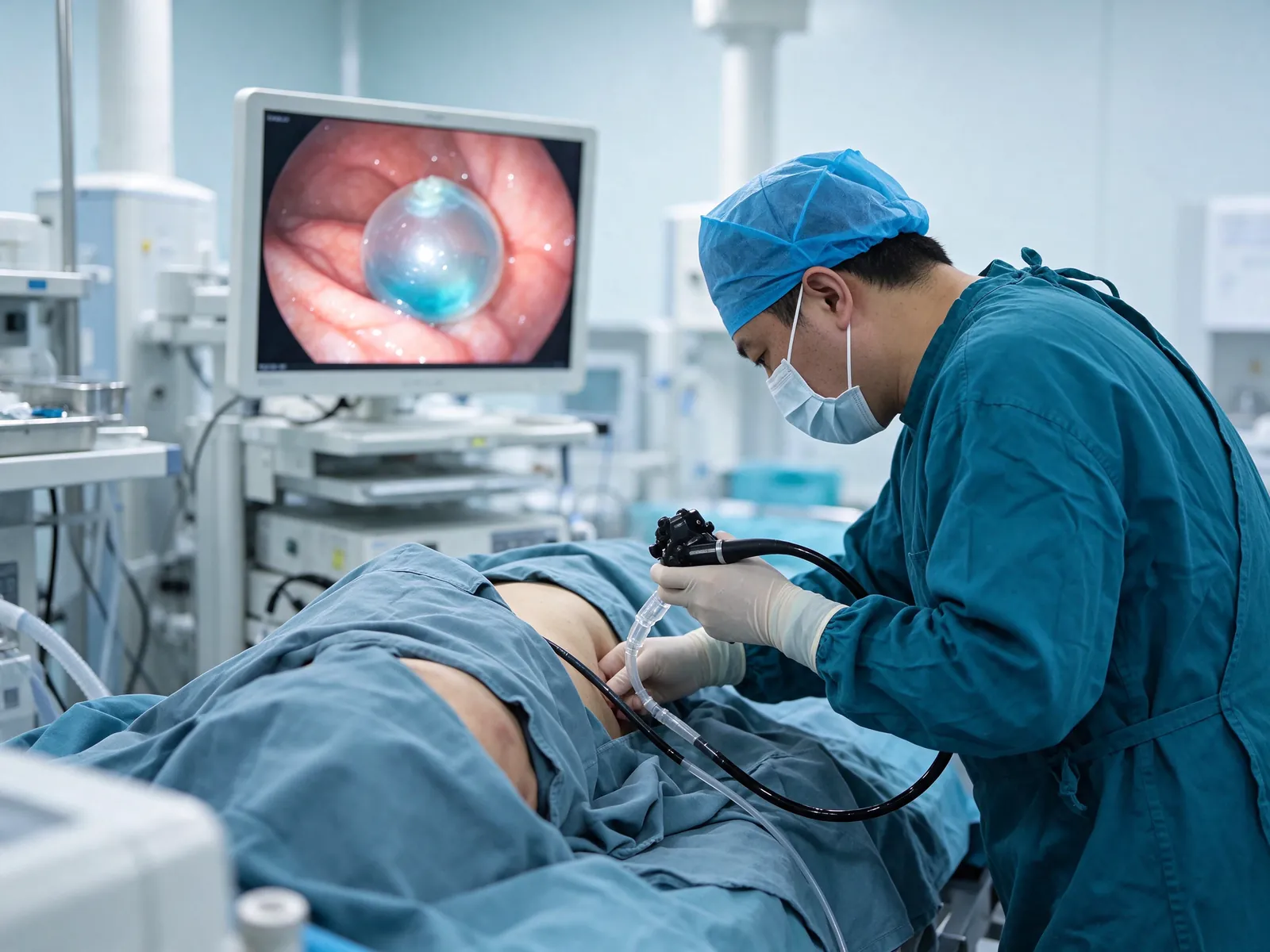
One of the most commonly used endoscopic types is a balloon placed in the stomach during endoscopy and filled with fluid. It usually remains in the stomach for about six months. In most cases, methylene blue is added to the fluid inside the balloon to make it easier to notice a change in urine colour if a leak occurs. The filling volume varies depending on the person and the system used; a commonly used range is approximately 400–700 ml.
This type is also removed endoscopically. At the end of the six months, the balloon should be removed as planned, the stomach lining assessed and the next weight-maintenance plan started. If the balloon is to remain in the stomach for longer, its safety and the instructions for the system used should be assessed separately.
Twelve-month adjustable balloon
Some systems are designed for use for about twelve months, and their volume can be adjusted if needed. The balloon’s volume can be reduced or increased while monitoring the person’s fullness, side effects and weight progress. Being adjustable does not mean it is more suitable for everyone; the device’s technical features, procedure requirements and follow-up protocol vary between centres.
These balloons are also inserted and removed endoscopically. Longer-term use may provide time to develop changes in diet and behaviour; however, risks such as reflux, ulcers or problems with tolerating the balloon remain relevant as the duration increases.
Swallowable balloon
A swallowable balloon involves filling a capsule-shaped balloon with fluid using a thin catheter. An X-ray can be used to check that the capsule is in the correct position. Depending on the system used, the balloon deflates after about four months and its parts may pass in the stool; some systems may use a different removal method. Not requiring endoscopy may be a significant convenience, but this option is not suitable for everyone.
If the capsule cannot be swallowed, it is not in the correct position during filling, or problems such as abdominal pain or vomiting occur, further assessment may be needed. Being swallowable does not mean that medical supervision is unnecessary. The planned imaging, medication and follow-up steps before and after the procedure should be followed.
| Balloon type | Approximate duration of use | Insertion/removal | Key point |
|---|---|---|---|
| Fluid-filled | 6 months | Endoscopic / endoscopic | Volume may be approximately 400–700 ml |
| Adjustable | 12 months | Endoscopic / endoscopic | Volume can be changed during follow-up |
| Swallowable | Approximately 4 months | Capsule, catheter and imaging | With a suitable system, it deflates on its own |
Who may be considered?
A gastric balloon may be considered for people who generally have a BMI of 27–30 to 40 and who do not want surgery or are not suitable for surgery. BMI is a screening measure calculated by dividing body weight by the square of height; it is not a decision criterion on its own. Diabetes, high blood pressure, sleep apnoea, fatty liver disease, joint problems and previous weight-loss attempts are also assessed.
For people with a very high BMI, a balloon may be considered as a bridge treatment before surgery. The aim is to make movement easier through weight loss or to help reduce the risks of surgery and anaesthesia. Its benefit depends on the person’s overall health, the surgical plan and the amount of weight to be lost; a balloon does not necessarily have to replace surgery.
For someone who does not want surgery, expectations should be discussed clearly as part of the decision. Because the balloon is temporary, a care plan is essential after it is removed. The expected benefit of the method may be reduced if regular follow-up and behavioural support cannot be provided.
Who should not have it, or should postpone it?
Before a gastric balloon is placed, a detailed medical history and examination are carried out, and endoscopy is performed when necessary. The following conditions may mean that balloon placement is not suitable or should be postponed until they have been addressed:
- Previous surgery on the stomach or oesophagus that may affect suitability
- Large hiatal hernia, narrowing, varices or active gastric or duodenal ulcer
- Pregnancy, breastfeeding or plans to become pregnant soon
- Use of blood thinners that increases the risk of bleeding and cannot be adjusted
- Active alcohol or substance dependence
- Uncontrolled or serious psychiatric illness, or eating behaviours that prevent cooperation
- Inflammatory bowel disease or serious gastrointestinal disease
- Medical or social circumstances that would prevent the person from following the monitoring and removal process
This list does not cover all risks. A history of previous surgery or ulcers does not always mean the procedure is definitely unsuitable; the decision is based on anatomical findings and the results of endoscopy. Blood thinners should not be stopped without medical advice; any adjustments should be made in consultation with the doctors involved.
Preparation before the procedure
At the first consultation, weight history, eating habits, reflux and abdominal symptoms, previous surgery, allergies, medicines and other medical conditions are assessed. Blood tests, liver and kidney function tests, blood glucose or clotting tests are requested when needed. An appropriate test is carried out for people who may be pregnant. If sleep apnoea or severe reflux is suspected, relevant assessments are arranged.
Endoscopy may be used to examine the lining of the oesophagus and stomach, and to check for ulcers, inflammation, narrowing and hiatal hernia. Not everyone needs the same tests; decisions are made according to the procedure planned and the findings. Before the procedure, the person must avoid solid food and liquids for a specified period, adjust the timing of some medicines and arrange to return home with someone accompanying them.
If sedation is used, the person should not drive on the day of the procedure and should postpone important decisions. Instructions about fasting, fluid intake, diabetes medicines and blood thinners are given on an individual basis.
How is an endoscopic balloon placed?
The procedure is usually performed with sedation or anaesthesia. First, a thin endoscope is passed through the mouth to examine the oesophagus and stomach. If appropriate, the deflated balloon is placed in the stomach using a catheter or guide system. The balloon is then filled with saline and, in most cases, methylene blue to make any leakage more noticeable, depending on the system used.
Placement usually takes about 20–30 minutes, although preparing for sedation and recovery take additional time. The balloon’s position, filling and appearance inside the stomach are checked. A short period of observation follows the procedure; discharge may be delayed if you have nausea, cramps or dizziness.
The balloon may cause a feeling of fullness from the first few hours. Drinking large amounts of fluid quickly may increase vomiting, so follow the procedure team’s advice on what to do during the first few hours.
How is a swallowable balloon fitted?
With a swallowable balloon, the capsule is swallowed while attached to the end of a thin catheter. Imaging is used to confirm that the capsule is in the stomach. After a specified amount of fluid is introduced through the catheter, the balloon’s size and position are checked again. If the person cannot swallow the capsule or the balloon is not in a suitable position, the medical team will decide how to proceed.
Depending on the product used, the balloon’s valve opens after about four months, the balloon deflates, and its parts pass through the intestines and are expelled in the stool. If you have severe pain, persistent vomiting, marked abdominal swelling, or are unable to pass stool or wind, do not wait for it to pass naturally; seek urgent medical assessment. The system’s removal protocol may vary according to the product information, so it is important to follow the instructions given to you.
What should you expect in the first few days?
During the first few days, the stomach tries to adapt to the foreign object and change in volume. Nausea, vomiting, cramps, belching, a burning feeling in the chest, reflux and weakness may occur. These symptoms can usually be managed with treatment; however, if they get progressively worse, you cannot keep fluids down or you urinate less, this may indicate fluid loss.
An antiemetic for nausea, a stomach-protective medicine to reduce stomach acid, and suitable medicines for cramps may be prescribed. Which medicine to use, at what dose and for how long will be decided for each person. Do not take non-prescription medicines, particularly if you have kidney disease, could be pregnant or take regular medication.
In the first few hours, take clear fluids in small sips. If vomiting continues, contact your healthcare team rather than forcing yourself to drink more. Dry mouth, dark or infrequent urine, dizziness and palpitations may be signs of dehydration.
Note: Blue-green urine may be a sign of leakage from a balloon filled with fluid containing methylene blue. Contact your medical team on the same day.
Dietary stages
The dietary plan varies according to the type of balloon, the person’s tolerance and the treatment protocol. In general, the stages are as follows:
- Clear liquids: During the initial period, water and unsweetened, still liquids are taken in small sips.
- Full liquids: As tolerance improves, soups containing protein or suitable liquid meals can be added.
- Purées and soft foods: Start with small portions, eating slowly and chewing well.
- Balanced solid diet: Move towards a diet containing protein, vegetables, fruit and controlled amounts of complex carbohydrates.
Sugary drinks, high-calorie coffees, alcohol and liquid calories can limit weight loss because they are easy to consume. Carbonated drinks can increase fullness and reflux. Rather than drinking large amounts of fluid with meals, fluids and meals are planned at suitable intervals. Reducing distractions such as the television or phone while eating can make it easier to notice feelings of fullness.
Protein intake is important for preserving muscle mass; the target amount is determined according to age, kidney function, activity level and the balloon protocol. Daily water requirements are also adjusted for each person. A dietitian can show you how to get enough protein and fluids without worsening nausea.
Factors affecting weight loss and success
With a gastric balloon, weight loss is generally around 10–15% of total body weight. This range is a general summary of results for different balloon types and follow-up periods; it is not a promise of an individual result. Starting weight, how long the balloon remains in the stomach, tolerance in the early period, adherence to the dietary plan, physical activity, sleep and psychological support all affect the outcome.
Weight loss may be faster in the first few weeks because of nausea and low energy intake. The aim afterwards is to establish a balanced, sustainable routine without excessive restriction. Losing weight too quickly can increase muscle loss or nutritional deficiencies; therefore, protein, fluids and resistance exercise should be monitored.
Dietitian appointments address portion sizes, protein targets, eating speed, constipation, reflux and emotional eating. Physical activity can start with walking and progress to muscle-strengthening exercises. For people with joint pain or sleep apnoea, the exercise plan is gradually increased safely.
How is the balloon removed?
An endoscopic balloon can be removed at the end of the planned period or if side effects that cannot be tolerated occur. Under sedation, the fluid inside the balloon is drained during endoscopy, the balloon is deflated using special equipment and removed through the mouth. The stomach lining can be examined again for ulcers, irritation or other problems.
The decision to remove the balloon early is based not only on discomfort, but also on fluid loss, uncontrollable vomiting, an ulcer, bleeding, balloon deflation or suspected other complications. Stomach symptoms may continue for a few days after removal, and the transition between dietary stages may need to be gradual again.
Although a swallowable balloon is intended to pass naturally, a check-up may be needed according to the system’s instructions. If it does not pass in the stool or there are signs of obstruction, do not wait.
Possible risks and warning signs
The most common problems are nausea, vomiting, cramping, reflux, belching and fluid loss in the early period. Some people do not tolerate the balloon and it needs to be removed earlier than planned. Irritation or an ulcer may develop in the stomach lining; black stools, vomiting blood, marked weakness and dizziness may be signs of bleeding.
In rare cases, small pieces may pass into the bowel if the balloon deflates, causing a blockage. Severe or persistent abdominal pain, increasing swelling, inability to pass wind or stools, and repeated vomiting are important warning signs. Pancreatitis is a very rare complication; it may cause severe upper abdominal pain that radiates to the back, along with vomiting. Although perforation is also very rare, sudden severe pain, fever and a rigid abdomen require urgent assessment.
Seek medical attention without delay if you experience any of the following:
- Inability to take in fluids or passing very little urine
- Severe, new or worsening abdominal pain
- Persistent vomiting, vomiting blood or black stools
- Fever, fainting, marked dizziness or shortness of breath
- Blue-green discolouration of the urine
- Marked abdominal swelling and inability to pass wind or stools
How can weight be maintained after the balloon?
Before the balloon is removed, the aim is to make the new eating pattern sustainable even without the balloon. Planning meals, getting enough protein, reducing liquid calories, exercising regularly and monitoring hunger and fullness cues are key steps. Sleep duration, stress and emotional eating should also be considered alongside changes in weight.
If weight gain begins, an early assessment is carried out rather than waiting for a long time. Support from a dietitian or psychological support, medication, a repeat balloon in selected people or surgical treatment may be considered. The decision to repeat the balloon is made by taking into account the stomach lining, previous tolerance, weight changes and overall risks. Repeating the procedure is not automatically suitable for everyone.
GLP-1 medicines or other weight-management treatments may be considered for some people after balloon treatment. Whether these medicines are suitable is assessed in the context of existing medical conditions, pregnancy plans, side effects and other medicines. Medicines should not be obtained online or without a prescription.
What is gastric Botox?
With gastric Botox, botulinum toxin is injected into specific muscle areas of the stomach during endoscopy. The aim is to create a feeling of fullness by temporarily affecting stomach contractions or emptying. The procedure does not leave a physical balloon inside the stomach, so its mechanism of action differs from that of a balloon.
The number and quality of studies on gastric Botox are more limited; there may be differences in the doses used, injection sites and results. It has not been shown to be equivalent in effectiveness to a gastric balloon. Even when there is a response, the effect may be temporary. When making a decision, the level of evidence, alternatives, procedural risks and the dietary plan afterwards should be discussed clearly.
Balloon or surgery?
| Feature | Gastric balloon | Obesity surgery |
|---|---|---|
| Procedure | Temporary endoscopic or swallowable method | Permanent surgical change |
| Weight loss | Usually around 10–15% | Usually greater, depending on the procedure |
| Follow-up | Needed while the balloon is in place and afterwards | Lifelong nutrition and blood test monitoring |
| Reversibility | Usually anatomically reversible once removed | Most procedures are irreversible or technically complex to reverse |
| Nutritional deficiencies | Usually more limited, but still monitored | Some procedures require more extensive monitoring |
| Suitability | Selected people who do not want or are not suitable for surgery | If BMI, medical conditions and surgical risk are suitable |
The fact that a balloon is less invasive does not mean it is always a better choice than surgery. Surgery may be a strong option for greater or longer-lasting weight loss and for conditions such as diabetes; however, it involves permanent anatomical changes and requires lifelong follow-up. A balloon provides temporary support, and a new plan needs to be maintained once it is removed. Treatment should be chosen after a detailed assessment with your surgeon.
Managing daily life with a balloon
While the balloon is in place, the texture of food is as important as eating speed and portion size. It is important to wait a few minutes after the first mouthful, notice the feeling of fullness, and not try to finish your plate once you start to feel satisfied. Very large mouthfuls, dry foods and food that has not been chewed well may increase the sensation of food sticking in the chest and vomiting. As individual tolerance varies, it is better to try a small amount of a food and monitor your symptoms.
When eating out, it can help to ask for sauces and portions to be served separately, choose water instead of fizzy drinks and alcohol, and avoid eating quickly after a long period without food. A balloon does not automatically stop emotional eating or stress-related snacking. If the urge to eat when you are not hungry becomes frequent, psychological support or behavioural therapy may be added to the treatment plan.
Physical activity should begin with low-intensity walking once nausea and fluid intake have improved. Later, the weekly duration of activity and resistance exercises can be increased gradually. If you feel dizzy, have palpitations or become extremely tired, stop exercising and have your fluid and nutritional status assessed. If you have joint disease, heart or lung problems, or are older, your exercise programme should be planned with the relevant specialists.
What is monitored during follow-up?
The first check-up takes place shortly after the procedure, depending on the type of balloon and any symptoms. At subsequent appointments, weight and waist circumference, nausea and vomiting, reflux, bowel movements, fluid intake, protein intake and daily activity are assessed. Measurements related to associated conditions, such as blood pressure and blood glucose, also provide information about the response to treatment. The aim is not only rapid weight loss, but also maintaining adequate nutrition and daily functioning.
If needed, tests may be requested for blood count, electrolytes, kidney and liver function, iron, B12 or other values. Prolonged vomiting can lead to electrolyte disturbances and worsening kidney function. If reflux or upper abdominal pain worsens, adjusting acid-reducing treatment, performing an endoscopy or removing the balloon early may be considered.
Missing follow-up appointments may mean that the balloon remains in place beyond its intended period without this being noticed, or that signs of leakage are recognised late. The removal date should be added to your calendar. If your follow-up arrangements change because you move or for another reason, tell your new healthcare team the type of balloon and the date it was placed.
Transitioning to balloon removal
As removal approaches, the portion sizes and meal intervals for the period without the balloon are reviewed with the dietitian. As the physical feeling of fullness provided by the balloon decreases, hunger and fullness signals need to be supported with other strategies. A protein-containing breakfast, whether planned snacks are needed, food options at work and weekend routines should be discussed in advance.
Regular exercise and follow-up continue until the day of removal. The stomach may be sensitive during the first few days after the balloon is removed; the transition from liquids to soft foods should follow the team’s advice. To maintain weight, choose a sustainable meal routine and behavioural support rather than following several restrictive diets at the same time.
If a person has lost less weight than expected while the balloon was in place, the reasons are reviewed rather than judging this as a failure. Factors may include being unable to use the balloon for the recommended period, protein deficiency due to nausea, sleep apnoea, certain medicines or untreated emotional eating. Addressing these factors before choosing a new method allows for a more appropriate assessment.
Special situations
In people with diabetes, the dose of blood glucose-lowering medicines may need to change as appetite and food intake decrease. Symptoms of hypoglycaemia, regular monitoring and how to take medicines should be clarified before the procedure. If you have kidney disease, are planning a pregnancy, take blood thinners or have severe reflux, the decision about the balloon should be made together with the relevant specialists.
A gastric balloon is not used for weight loss during pregnancy. If pregnancy occurs while the balloon is in place, the obstetrics and gynaecology team and the team monitoring the balloon should be informed promptly; nutrition, fluid intake and the timing of removal will be reassessed. During breastfeeding, a separate safety assessment is also needed for medicines and endoscopic procedures.
Starting or continuing GLP-1 medicines alongside the balloon may be considered for some people, but the risk of nausea, vomiting and fluid loss may increase. The decision to use both methods together is made only with monitoring by the healthcare team. Weight-loss products bought online, herbal mixtures or non-prescription medicines may interact with the balloon and may not contain a reliable dose.